The Story of Steel - “Bend Me Shape Me, Weld Me...”
The Story of Steel - “Bend Me Shape Me, Weld Me...”
In the previous notes on “Steel,” we looked at its initial creation as iron oxide from stars in the galaxy, its deposition and processing as Steel on Earth, its weldability and its microstructure, now we will look at how this material affects us each and every day and, how we are basically surrounded by it.
So “Steel,” where would the world be without it, indeed where would Canada be without it? Since first used in the 1600s and since the creation of the first furnaces for steel production in the 1800’s, steel has literally taken over the world.
Why is that? Principally because steel is a very unique material in the fact that it can be made strong by alloying and heat treatment but, at the same time, very ductile and capable of being, formed into whatever shape we require as shown in the car body in Figure 1.
Thanks to our steel mills and the fabrication facilities that create product, you may awake in the morning to take milk from a steel fridge, coffee from a steel container, fry eggs on a steel stove, make toast in a steel toaster, jump into an automobile whose body and frame are made in steel, drive past construction sites with steel waste bins where the trades professionals use steel tools and then drive over steel bridges and past office towers that contain giant steel skeletons.
When you get to work you may ride the steel elevator, supported by steel cables. Once in the workplace you switch on the air conditioner, copier, computer and the coffee machine where the power is supplied from electricity which could be generated from gas transported in steel pipelines, from steel turbines in a hydroelectric station (Figure 1), from steel plant in a Candu reactor or from steel towers supporting wind turbines.
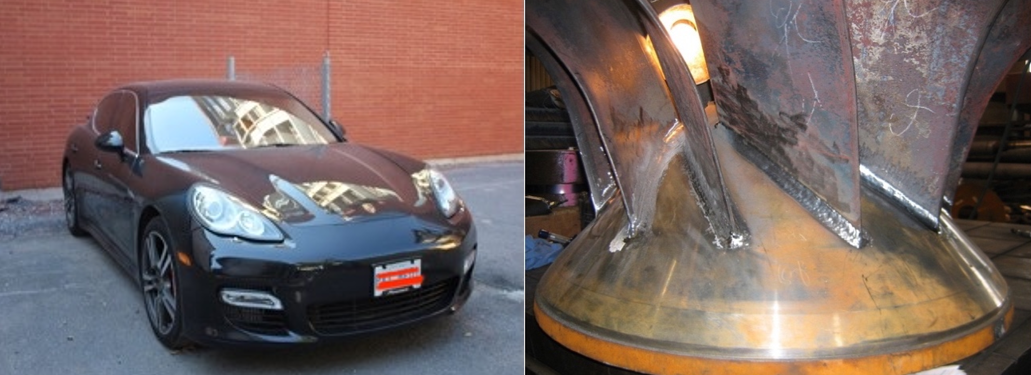
Alternatively, you get to work and insert a steel consumable into your electrode holder and begin to deposit a weld on weathering steel intended for a bridge member that will oxidize and turn a lovely shade of reddish brown You could use a steel rod with GTAW to deposit the root pass between two steel tubes designed to carry steam which will feed the turbines that supply the power to heat your lunch and power buddies’ computer and coffee maker and your partner’s hairdryer. You could eat the sandwich you made for your lunch, packaged in plastic derived from the oil obtained from offshore production platforms off Newfoundland made in welded steel or mined from the oil sands in Alberta using heavy steel equipment. (Figure 2)
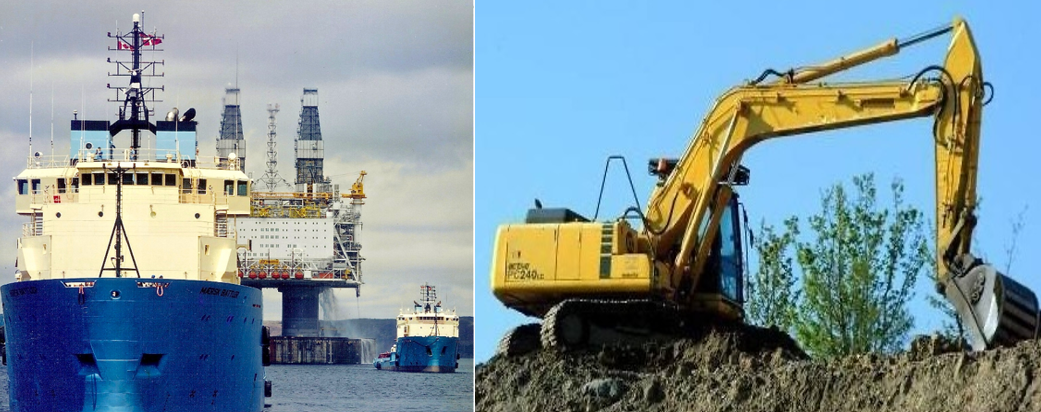
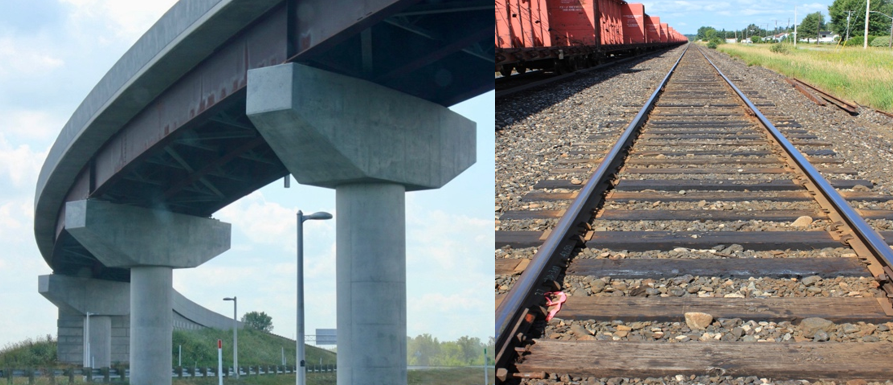
You may get to work and sail away to far flung lands in a container vessel fabricated in steel or sail in a Canadian Offshore Patrol Vessel also made in steel. You could be involved in finishing the welds on a steel armored personnel carrier sent to protect our soldiers stationed in Europe. You could get to work and be fabricating a steel rail car that will carry goods across this land, pulled by steel locomotives, across steel bridges and viaducts and along steel rails . These rails that wind their way from the east coast of Halifax, Nova Scotia to the west coast at Vancouver or Prince Rupert, British Columbia and which stitch and connect this country together in a mammoth and quite magnificent steel rail network as per Figure 3.
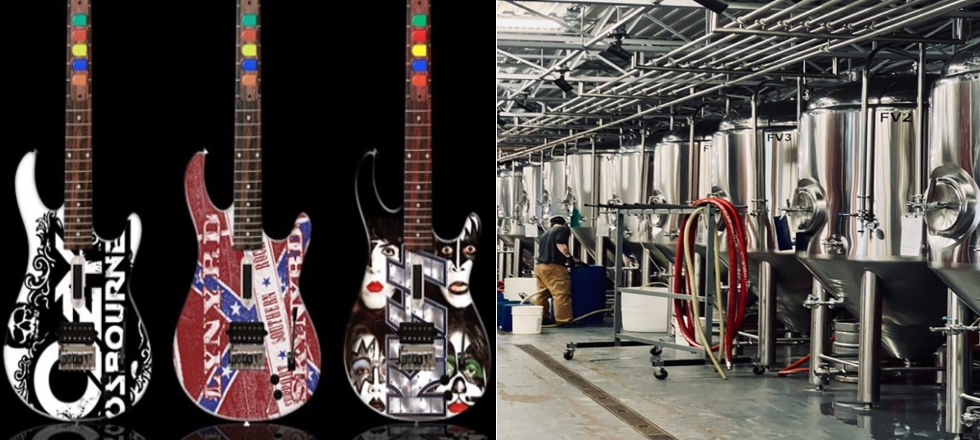
You could return home from work, board a subway travelling on steel wheels and go to a club and watch a band playing its steel stringed guitars knowing their kit has been delivered on steel trolleys with steel wheels from a steel truck. You have a drink that may have been brewed in an austenitic stainless-steel beer vat, (Figure 4) and bottled in a plant using steel bottling equipment and been delivered by a steel truck.
As the day draws to an end, you can jump the big steel limo, stare into the evening sky and, behind the silhouetted steel construction cranes you can see the flashing lights and watch the big jets departing the airport on undercarriages strengthened with steel as per Figure 5
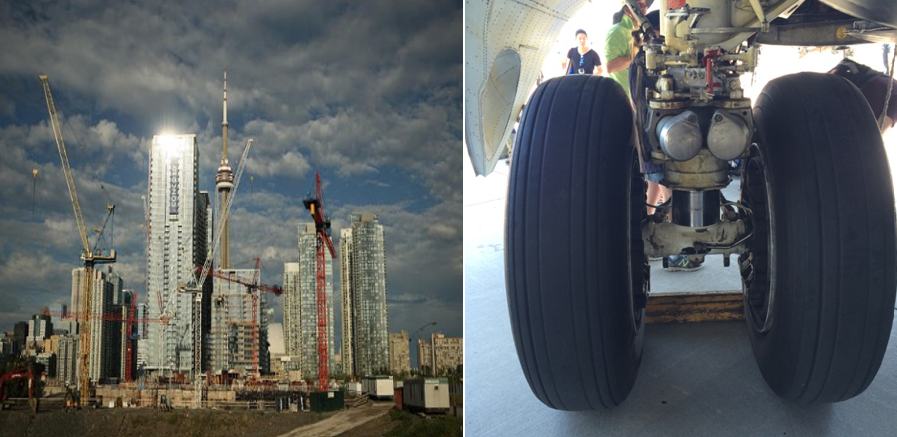
These aircraft will fly over your head; fly over the fields, lakes, rivers, prairies and mountains of this vast country charting the same course as the original bridge and railroad pioneers. To quote: “there was a time in this fair land when the railway did not run and where those wild majestic mountains stood alone with just the sun.”**
So, those afore mentioned pioneers took the steel, engineered and joined it, so that basketfuls of goods could reach you and ensure that you could travel for miles into the horizon, freely and endlessly, over those mountains, along those river beds, through those canyons and across the plains......seemingly for ever and ever. All this because of “Steel”, look around wherever you are and know “where would we be without it!”
Mick J Pates IWE
President PPC and Associates
** Quote based on lyrics from Gordon Lightfoot’s “Great Canadian Railroad Trilogy”
Disclaimer
The information provided is intended for general interest, to educate and inform our audience. The CWB and those providing feedback to the questions do not take any responsibility for any omissions or misstatements that could lead to incorrect applications or possible solutions that industry may be facing.
How It Works content is submitted by Industry experts to the CWB Association and does not necessarily reflect the views of the CWB Group. When testing for CWB Certification or CWB Education, please refer to CWB Education textbooks or CSA standards as the official source of information.